A Capsule House for
Resort Hospitality in India.
One bedroom. One bathroom. One private balcony.
A modular accommodation product designed for destination hospitality.
By Jeet PipaliaFounder, ModularoomPublished
India's most memorable resorts are often found in places where conventional construction is least convenient — mountains, forests, coastlines, farms and remote landscapes.
This is creating new interest in capsule houses in India as an accommodation format for destination hospitality.
Unlike a conventional hotel room, a purpose-designed capsule house can function as an independent guest suite, bringing together a bedroom, bathroom and private outdoor space within a compact architectural unit.
Modularoom's CS25 takes this approach specifically for hospitality: one bedroom, one bathroom and a private balcony, designed as a repeatable accommodation product for resorts, retreats and experiential stays.
0101 — What is a capsule house?
A compact, self-contained
architectural unit.
A capsule house is a compact, self-contained architectural unit designed around the essential functions of living or hospitality.
For a resort, that can mean:
Bedroom + Bathroom + Balcony + View
Instead of placing every guest room inside one large building, individual capsule houses can be positioned across a landscape.
The result is a different way of thinking about accommodation. The room becomes an independent destination rather than simply a room inside a building.
This makes capsule houses particularly interesting for destination hospitality, where the surrounding landscape is often as important as the accommodation itself.
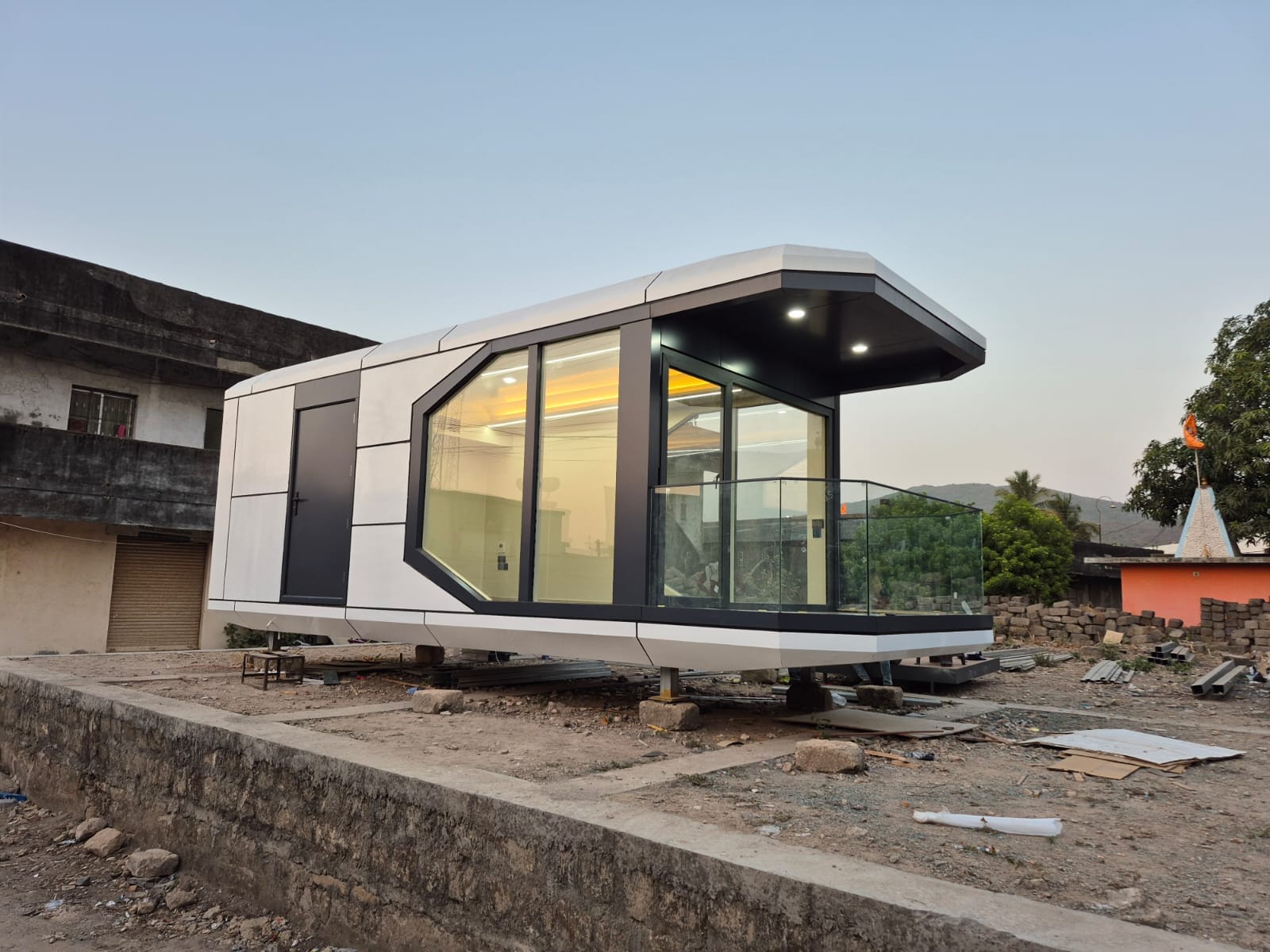
Anatomy of a resort capsule house · Modularoom CS25 · exterior
0202 — Why hospitality?
Traditional hotels optimise a building.
Resorts optimise an experience.
A city hotel may benefit from stacking rooms vertically and maximising floor area. A destination resort can have a very different priority:
- · Privacy.
- · Views.
- · Landscape.
- · Outdoor living.
- · Quiet.
- · Connection with nature.
Capsule houses allow accommodation to be distributed across a site rather than concentrated entirely within one structure.
This can give architects and developers greater freedom to position accommodation according to views, terrain, vegetation, privacy and the character of the site.
Distributed accommodation vs. centralised construction.
Standardise the product. Personalise the placement.
0303 — Meet CS25
A Capsule Suite
designed for hospitality.
CS25 is Modularoom's hospitality-focused Capsule Suite, designed as an independent accommodation unit for resorts and destination-led hospitality.
Its proposition is deliberately simple: a complete private guest experience within a compact, repeatable architectural product.
The bedroom provides the core accommodation. The bathroom provides the essential hospitality infrastructure. The balcony extends the experience outdoors. And the surrounding landscape becomes part of the stay.
CS25 · Completed exterior
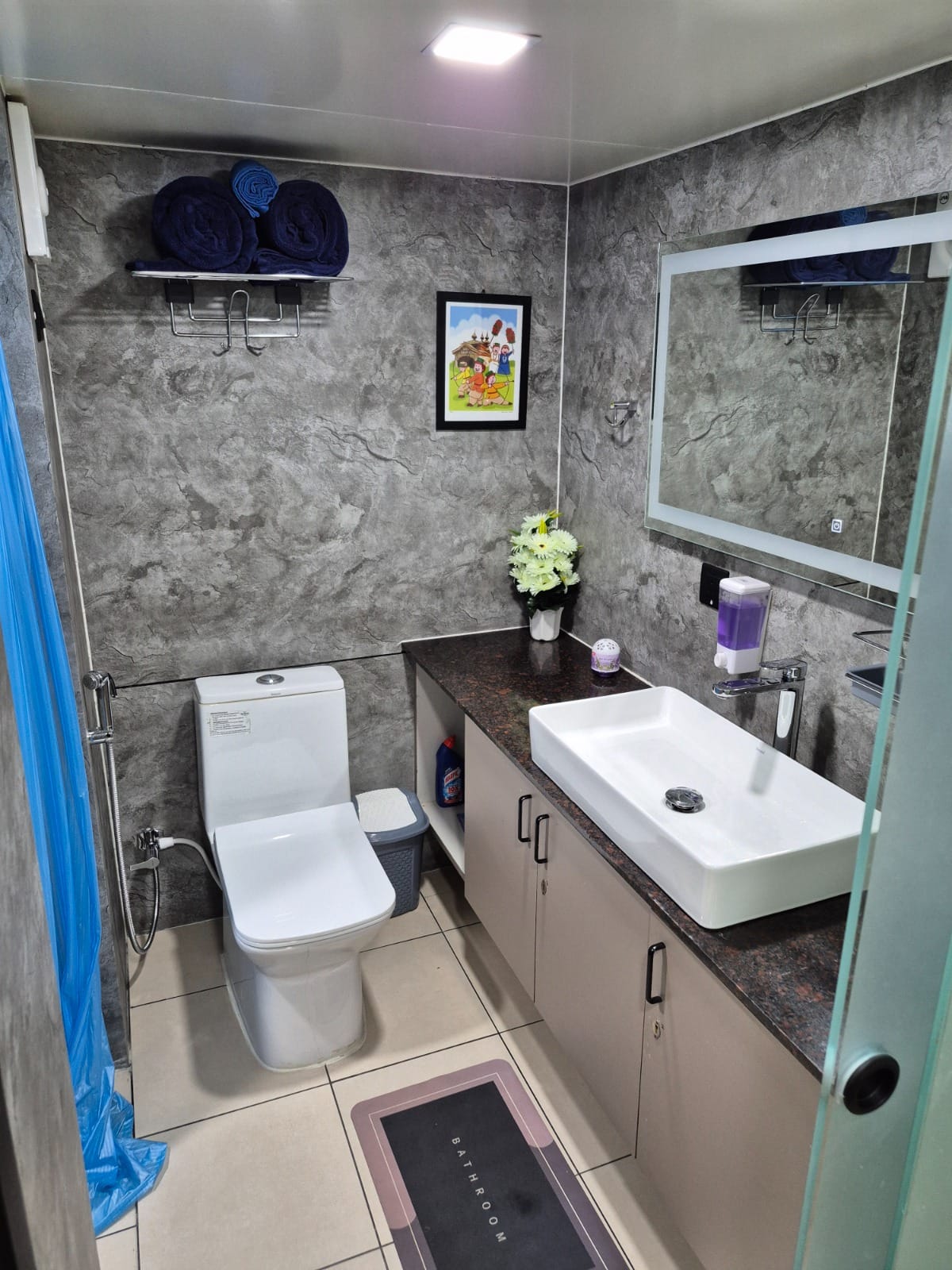
CS25 · Private bathroom
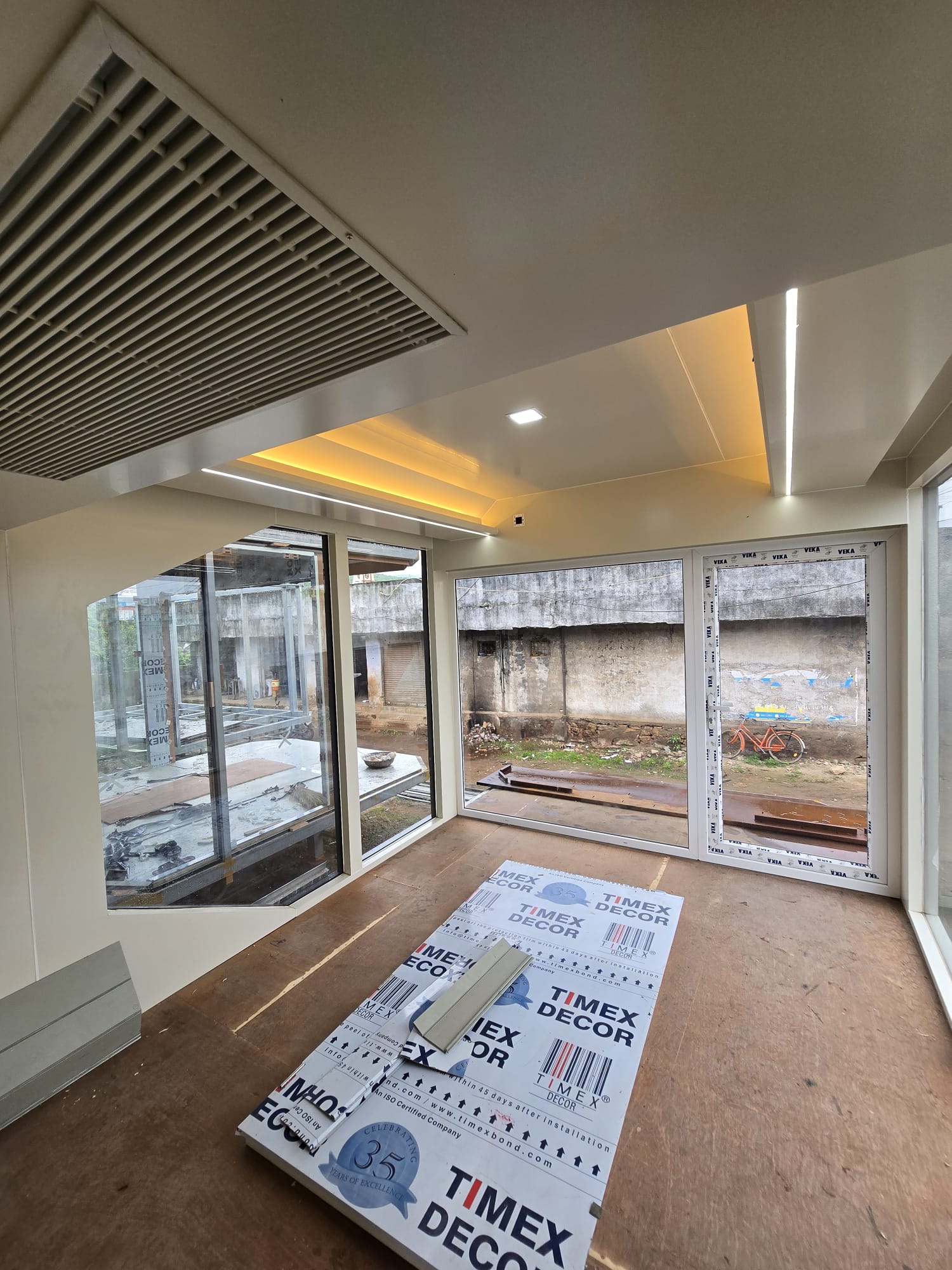
CS25 interior during manufacturing and finishing.
0404 — One CS25. Many destinations.
The strongest opportunity for a capsule house
isn't the city.
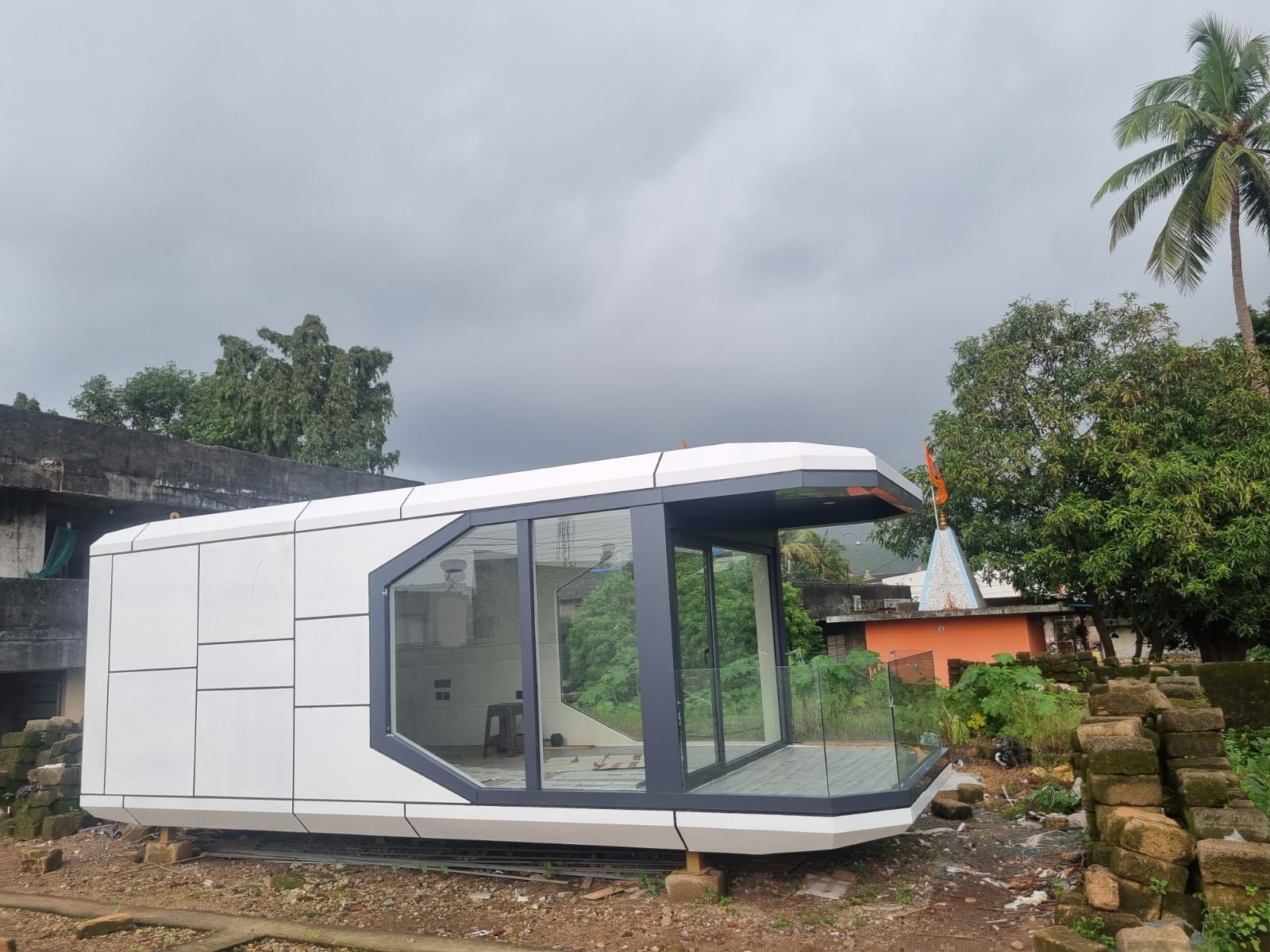
CS25 in a natural setting · destination hospitality.
A CS25 can be oriented toward the defining feature of a site. The product remains standardised. The experience becomes site-specific.
Frame dramatic views and create private retreats.
Independent accommodation immersed in a natural setting.
Orient the bedroom and balcony toward the water.
Premium accommodation for farm and rural hospitality.
Self-contained destination stays in expansive landscapes.
Private hospitality where development is legally permissible.
One product. Many destinations.
0505 — Can capsule houses work in sensitive locations?
Some of India's most attractive destinations
are also its most regulated.
National parks. Wildlife sanctuaries. Eco-Sensitive Zones. Coastal areas. Protected landscapes.
Here, one distinction is essential:
Modular does not mean exempt.
A prefabricated or modular building does not automatically bypass environmental, wildlife, coastal or local planning regulations.
Commercial tourist lodges and hotels inside wildlife sanctuaries are subject to specific approval requirements under India's Wildlife (Protection) Act. Similarly, coastal development is governed by India's Coastal Regulation Zone framework, with development controls depending on the site's classification and applicable planning framework.
So the opportunity is not:
Build where construction is prohibited.
It is:
Where hospitality development is legally permissible, can modular architecture provide a more controlled and site-sensitive way to deliver accommodation?
That is where the concept becomes compelling.
For remote or environmentally sensitive destinations, the wider project still needs to address land use, access, foundations, utilities, wastewater, ecological impact and all applicable approvals.
Development cannot proceed merely because the unit is modular.
Assess site conditions, approvals, infrastructure and modular deployment.
0606 — From factory to resort
We make it.
We transport it.
We install it.
One of the defining characteristics of modular construction is the separation between manufacturing and site work.
A conventional room may require many construction activities to take place at the destination: structure → walls → services → finishes → bathroom → furniture.
A modular approach can move a substantial portion of those activities into a controlled manufacturing environment. The objective isn't to eliminate construction. It is to change where and how the work happens.
For remote hospitality projects, this can be particularly relevant because the site may have limited labour, difficult access or a short practical construction window.
CS25 interior during manufacturing and finishing.
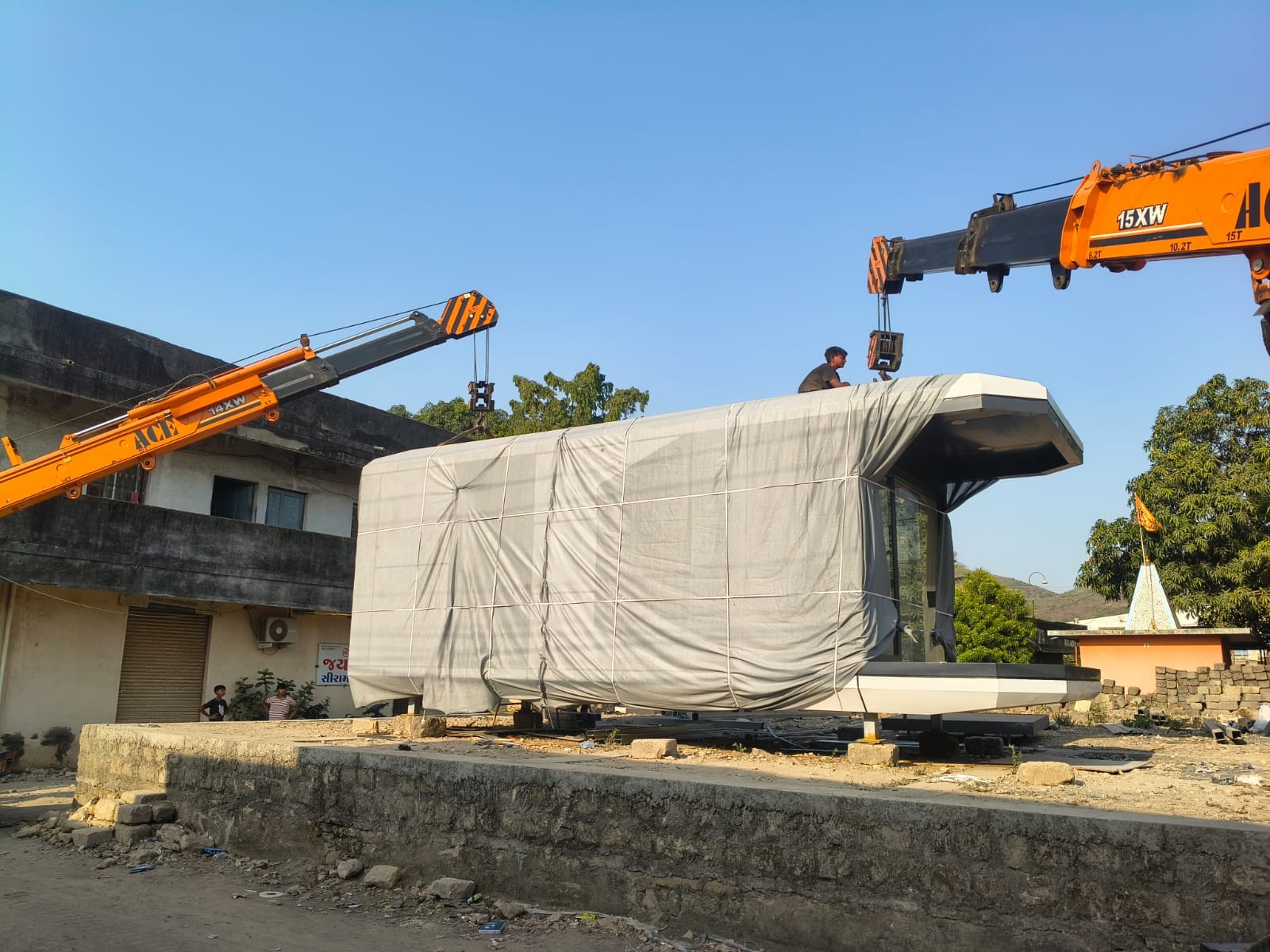
CS25 being transported to its destination.
CS25 being positioned during modular installation.
0707 — Building a resort around CS25
A resort as a system
of architectural products.
A capsule resort does not need to look like a collection of identical rooms. The masterplan can use the same architectural product in different orientations and positions.
Consider a conceptual 12-key CS25 resort. Twelve suites can be distributed around landscape, views, privacy, topography, pedestrian movement and shared amenities, with a central hospitality zone containing facilities such as reception, dining, pool and wellness spaces.
The actual phasing depends on approvals, infrastructure, financing and demand. But modular accommodation naturally lends itself to a repeatable development model.
The resort becomes a system of architectural products rather than one indivisible construction project.
Conceptual masterplan
Illustrative only. Final resort layouts depend on site conditions, applicable regulations, infrastructure and project requirements.
0808 — Conventional vs modular resort development
Which approach is better
suited to the site?
The comparison isn't simply about which construction method costs less. The more useful question is: which development approach is better suited to the site and hospitality concept?
| Conventional construction | Modular capsule suite | |
|---|---|---|
| Manufacturing | Primarily on site | Significant factory production |
| Site labour | Extensive | Reduced for many activities |
| Repeatability | Rebuilt for each room | Product-based |
| Quality control | Site dependent | Controlled manufacturing processes |
| Remote logistics | Multiple material deliveries | Coordinated unit transportation |
| Phased development | Possible | Naturally suited to repeatable units |
| Site adaptation | Highly flexible | Product + site planning |
| Guest experience | Design dependent | Design dependent |
Neither approach is universally better. A modular system is most compelling when its manufacturing, transportation, installation and operational advantages align with the project's requirements.
And importantly: a modular building remains subject to the regulations applicable to its location and intended use.
0909 — The future of destination hospitality
Where the landscape
remains the hero.
India has extraordinary destinations. The opportunity is not simply to put more rooms into them. It is to create better relationships between accommodation and place.
A bedroom facing a mountain. A balcony overlooking a forest. A private suite beside a vineyard. A retreat surrounded by farmland.
This is where capsule houses become interesting. Not because they are small. Not because they are unusual. But because they can turn accommodation into a repeatable architectural product that can be positioned around the experience a destination is trying to create.
CS25 is Modularoom's expression of that idea: one bedroom, one bathroom, one private balcony — a Capsule Suite designed for resorts, retreats and destination hospitality.
The room is the product. The landscape is the destination.
One bedroom.
One bathroom.
One private balcony.
A Capsule Suite designed for resorts, retreats and destination hospitality. Explore modular hospitality or explore Modularoom projects.
Capsule houses, resorts
and what they can (and can't) do.
A capsule house is a compact, self-contained architectural unit designed for living or hospitality. In resort applications, it can function as independent guest accommodation containing spaces such as a bedroom, bathroom and private outdoor area.
A capsule house resort uses independent capsule-style accommodation units distributed across a site instead of relying entirely on a conventional hotel building.
CS25 is Modularoom's Capsule Suite designed specifically for hospitality. It provides one bedroom, one bathroom and a private balcony within a compact modular accommodation unit.
Yes, where the proposed development is legally permissible and the units satisfy applicable structural, building, fire, environmental and planning requirements.
Not automatically. Modular construction does not bypass wildlife or environmental regulations. Protected areas can have strict restrictions and specific approval requirements.
Potentially, where the proposed development is permissible under applicable coastal regulations and planning frameworks. Prefabrication does not exempt a project from CRZ requirements.
Learn more about Modularoom Capsule Suites, discover the CS25 Capsule Suite, or discuss your resort project.